
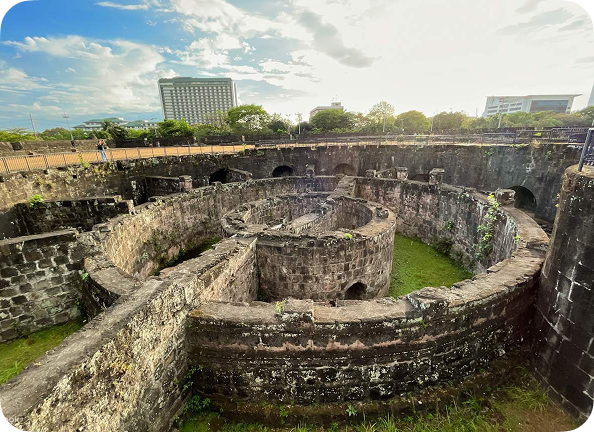

The Intramuros Travel Guide
Image by Free Two Roam
Intramuros is one of the best places in Manila to explore the Philippines’ colonial history while discovering a quieter, more traditional side of the capital. Behind its historic stone walls are centuries-old churches, museums, restored houses, leafy courtyards, and streets that tell stories of Manila’s colorful past.
Whether you’re planning a cultural day trip, searching for local dining spots, or looking for a new perspective on the city, Intramuros has plenty to offer. This travel guide covers the district’s history, must-visit attractions, restaurants and cafés, practical travel tips, and a nearby hotel to consider for your stay.
A Brief History of Intramuros

Image by @maverick_____! via Instagram
Intramuros, a Spanish term meaning “within the walls,” served as the center of Spanish colonial government in Manila. Before Spanish rule, the area was part of a network of villages and trading communities along the Pasig River, including those linked to local leader Rajah Sulayman.
In 1571, Spanish leader Miguel López de Legazpi took control of Manila and began building up Intramuros as a heavily defended colonial capital. Its spot right next to the Pasig River and Manila Bay made it an important location for trade, government, and military defense.
Over time, the district grew into a walled city filled with stone walls, defensive gates, churches, government buildings, and homes for Spanish officials and church leaders. Its layout also showed the unfair social structure of colonial Manila, where wealth and power decided who got to live inside.
Building Intramuros took decades and required the hard labor of local Filipinos and other workers under Spanish rule. The stone walls eventually replaced older, weaker defenses, creating a large, secure space designed to protect the Spanish government and control who could enter the city.
Intramuros survived several major challenges, including the British occupation of Manila in 1762 and many strong earthquakes. Its worst damage came during the Battle of Manila in 1945, when much of the district was reduced to rubble.
Later, restoration efforts helped save the surviving walls, churches, and historic buildings. Today, Intramuros remains an important heritage spot where visitors can learn about the Philippines’ colonial past, the effects of war, and the ongoing work to protect Manila’s history and culture.
Practical Tips for Visiting Intramuros
A little planning can make your visit to Intramuros more comfortable. Although many attractions are within walking distance of one another, the heat, individual site schedules, and time spent exploring can affect how much you can fit into a day. For more details and walking tour options, visit www.intramuros.gov.ph.
How to Get to Intramuros
If you’re commuting by train, Central Terminal Station on LRT-1 is one possible starting point for reaching Intramuros. Your walking route and travel time will depend on your destination and the available pedestrian crossings.
You can also book a ride through Grab or another transport service and set your destination to a specific landmark, such as Fort Santiago or Manila Cathedral.
For a smoother trip, choose your first attraction in advance. Intramuros has several entrances and access points, so providing a specific destination is more useful than simply asking your driver to go to the Walled City.
Best Time to Visit
Late afternoon is another option if you prefer to avoid some of the midday heat and want to finish with a walk along the walls or a meal nearby.
Manila’s tropical weather can be unpredictable, so check the forecast before leaving. Rain, high temperatures, and changes to attraction schedules may affect your plans.
What to Wear and Bring
Intramuros is best explored on foot, so wear comfortable walking shoes suitable for uneven pavement, steps, and historic walkways.
Some outdoor areas have limited shade, and you may spend more time walking than expected. Taking regular breaks and staying hydrated will help you enjoy the visit.
Church Dress Code and Visitor Etiquette
Manila Cathedral and San Agustin Church are active religious sites. Visitors should dress respectfully, keep noise to a minimum, and avoid interrupting services or people who are praying.
Covering your shoulders and knees is a sensible choice when visiting churches, particularly during religious services. Photography restrictions may apply in certain areas, so follow posted instructions and staff guidance.
Entrance Fees and Budget
Walking along the public streets of Intramuros is generally free, but some attractions charge admission. The Intramuros Administration lists the following regular entrance fees for selected attractions:
| Attraction | Regular Fee |
|---|---|
| Fort Santiago | PHP 75 |
| Casa Manila | PHP 75 |
| Museo de Intramuros | PHP 200 |
| San Agustin Museum | PHP 200 |
Bring some cash for smaller purchases and local transport, while checking which establishments accept electronic payments. If you plan to join a guided tour or rent a bicycle, include those costs in your budget.
A half-day visit can cover a few major landmarks, while a full day allows more time for museums, churches, cafés, and guided activities.
Where to Stay Near Intramuros: City Garden Suites
After a day spent exploring historic fortresses, centuries-old churches, and charming streets, return to a comfortable space where you can relax, recharge, and prepare for another day of discovery.

Superior Room, City Garden Suites
Located on A. Mabini Street in Ermita, City Garden Suites is a great spot for travelers who want to explore Intramuros while staying close to other Manila attractions. Staying in Ermita gives you an easy way to experience the city’s history, food, and culture.
After hours of walking, head back to your air-conditioned room and settle in for a relaxing evening. You can also ask about the hotel’s facilities and amenities – using the gym or booking an in-room massage if you want to unwind after a busy day.
When it’s time to eat, you won’t have to look far. Head to Café Miranda, the hotel’s in-house restaurant, for local favorites and international dishes. You can also visit the Lobby Bar for a drink and a relaxed end to your day. Having dining options within the hotel makes it easier to enjoy a quiet evening before heading out to explore more of Manila the next morning.
Stay Steps from Manila’s History
Rest, recharge, and explore Intramuros from City Garden Suites in Ermita.
Book a Room
Pingback: Discover Southeast Asia: Top 10 Cities To Visit | Love Happens Mag